

Healthcare Data Architecture Needs Equitable Modernization
By Humberto Melo, Northeastern University


Currently there is an enormous amount of healthcare data created every day. Providers generate roughly 137 terabytes of data every 24 hours , and a single patient produces 80+ megabytes of medical data every year. While this represents a goldmine for medical innovation, it is often chaotic in practice. Without a solid data architecture, organizations struggle to leverage this information to benefit patients, resulting in delayed care and stalled disease prevention. With Artificial Intelligence now at the forefront of clinical care and research, data architecture is no longer just a back office IT concern. It is a clinical necessity. However, if data remains trapped in unusable formats or siloed legacy systems, the promise of AI innovation fails to clear the first hurdle. To unlock the potential of AI and improve global patient outcomes, the healthcare industry must pivot from a culture of data hoarding to a modernized, interoperable architecture that treats data as a fluid and collective asset.
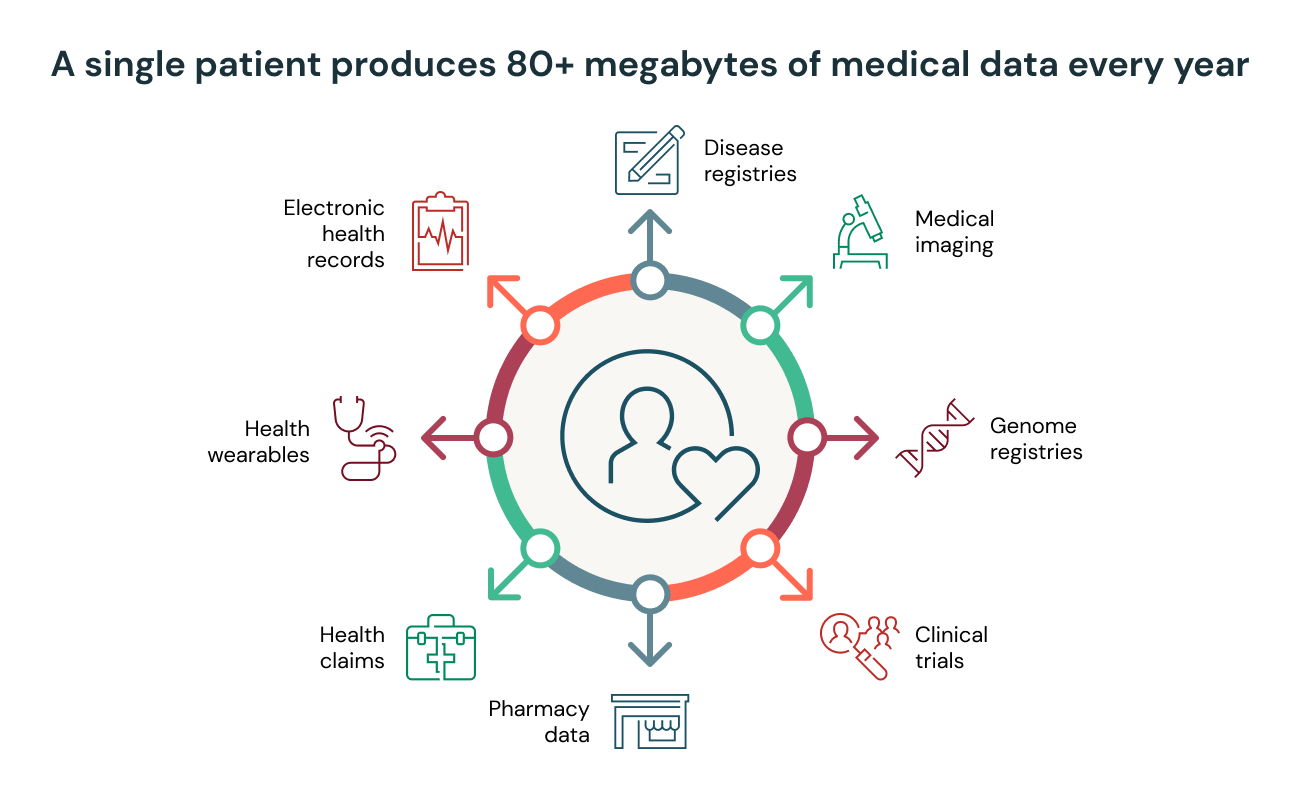
Fig. 1. A single patient data creation graphic
The Present
Healthcare delivery is currently hindered by data hoarding and siloed systems. Currently, healthcare data is stored using a combination of on-premises servers for maximum local control, cloud-based solutions (like AWS or Azure) for rapid scalability and outsourced maintenance, or hybrid models that split information between the two to balance security and cost. These systems are governed by strict HIPAA and ePHI compliance standards, utilizing AES encryption and multi-factor authentication to protect sensitive records ranging from Electronic Health Records (EHR) to clinical trial data. To ensure reliability, modern providers implement disaster recovery plans such as automated backups and redundant power sources, ensuring that patient information remains accessible and secure even during hardware failures or connectivity issues (Kholodenko, 2025). Overall systems are efficient; the problem arises when a patient switches providers, and overall data collection from wearable devices could directly impact care and help in prevention.
Furthermore, this fragmentation fuels a crisis of clinician burnout. Doctors and nurses spend a disproportionate amount of their day on the administrative burden of manually reconciling data across different platforms. This is time that should be spent at the bedside. Recent wellbeing surveys of American physicians indicate that over 50 percent of clinicians report symptoms of burnout. They cite excessive electronic health record work outside of office hours as a primary driver. In many cases, primary care providers are spending more than eight hours a week navigating poorly designed interfaces just to ensure a single patient profile is accurate. This is time stolen from the patient provider relationship and a significant drain on the stability of the global healthcare workforce.
Modern data architecture is the fundamental prerequisite for meaningful AI and predictive analytics in medicine. Unified data allows for the early detection of life-threatening conditions. These are centralized repositories that store vast amounts of raw data in its native format. For instance, integrated systems have shown significantly higher success rates in early sepsis detection compared to siloed systems. In siloed systems, vital signs and lab results live in separate and disconnected databases. When an algorithm can view a patient’s historical lab results, real-time vitals, and genetic markers simultaneously, it can predict a septic event hours before clinical symptoms manifest. In a siloed environment, those same data points are noise. In a unified architecture, they are a life saving signal.
Beyond predictive power, modernization is the only ethical path forward for AI development. High quality and clean data sets are the primary weapon against algorithmic bias. When AI is trained on fragmented or non-representative data, it risks producing skewed results that exacerbate health disparities. This often happens when data is pulled only from high resource urban hospitals. A well-documented case of historic bias involved a risk prediction algorithm that systematically underestimated the health needs of Black patients by using prior healthcare expenditure as a proxy for health needs. Modern architecture allows for the collection of more inclusive data sets. This ensures that AI models are trained on the cultural, linguistic, and genetic variety of the entire population they serve. Equity cannot be retrofitted into a broken system. It must be a foundational design principle of the data architecture itself.
The market is responding to this shift with a massive migration toward cloud-native solutions. The global healthcare cloud computing market is projected to reach over 222 billion dollars by the early 2030s . This is driven by the need for secure data sharing and scalable infrastructure. This growth is not just about storage. It is about the platformization of healthcare. Leading organizations are moving from monolithic legacy systems to modular platforms that automate workflows and support autonomous diagnostic validation. By 2026, the competitive necessity of hospitals is no longer defined by how much data they store. Instead, it is defined by how effectively they can move that data into the hands of clinicians and researchers. High growth vendors are no longer just software providers. They have become efficiency partners helping systems migrate from laggardly on-premise servers to responsive and mobile-first web portals.
Modernizing architecture also allows healthcare to extend into the community through innovative partnerships. The Congregational Care Network provides a compelling case study of how data-driven partnerships can address the social determinants of health. By connecting health systems with local congregations, this network has successfully reduced loneliness and shifted healthcare utilization for at-risk older adults. It moves care from expensive emergency rooms to more effective outpatient settings. This level of community-integrated care is only possible when data architecture is flexible enough to bridge the gap between clinical systems and social support networks. When a hospital’s data can talk to a community connector, the system moves from reactive treatment to proactive wellness.
Recommendation 1: Implement a Hybrid-Cloud Data Fabric with FHIR-Native APIs
To resolve the issue of “siloed” data, the organization should transition from legacy on-premises storage to a hybrid-cloud architecture. By utilizing Fast Healthcare Interoperability Resources (FHIR) as the standard for all data exchange, the system can ensure that patient records move seamlessly between departments and external providers.
Recommendation 2: Deploy AI-Driven “Ambient Scribe” Technology to Reduce EHR Burden
To combat the 54% burnout rate cited by The Physicians Foundation (2025), the hospital should integrate ambient AI clinical documentation tools. These systems use natural language processing (NLP) to listen to patient encounters and automatically draft clinical notes in the EHR.
Recommendation 3: Establish an Automated “Equity Audit” Pipeline for Clinical Algorithms
Following the findings of Obermeyer et al. (2019), the data architecture must include an automated auditing layer. Before any predictive AI (such as sepsis alerts) is deployed, it must be tested against diverse datasets to ensure that proxies (like “cost”) are not introducing racial or socioeconomic bias.
Conclusion
Ultimately, the transition from fragmented legacy systems to a unified data congregation model is a move from data ownership to data stewardship. The past of healthcare data was a map of isolated islands. The future must be a unified and API-led model where data flows where it is needed most. By embracing cloud-native and interoperable systems, healthcare organizations can finally move past the limitations of the last twenty years. We must stop treating data as a proprietary secret to be guarded. We must start treating it as a fluid asset that has the power to save lives, reduce provider burnout, and usher in an era of truly ethical AI when it is shared securely. The technology exists, the regulations are in place, and the clinical need is undeniable. The only remaining barrier is the willingness of the industry to let go of the silos of the past.
References
Fortune Business Insights. (2024). Healthcare cloud computing market size, share & industry analysis.
HealthTech Magazine. (2023, May 22). Structured vs. unstructured data in healthcare: What’s the difference?
Kovtun, V. (2023). Data storage in healthcare: Key types, benefits, and challenges. CodeIT.
Obermeyer, Z., Powers, B., Vogeli, C., & Mullainathan, S. (2019). Dissecting racial bias in an algorithm used to manage the health of populations. Science, 366(6464), 447–453.
SciForce. (2024). Turning chaos into clarity: Mastering unstructured healthcare data with AI.
The Physicians Foundation. (2025, September 17). 2025 wellbeing survey of America’s physicians: Stress and anxiety surge during a tumultuous year in medicine.
 | A guest post by
|